
Key takeaways
- The FAA halted all US departures on Friday, November 13, 2026, and lifted the order at 8:15PM ET after more than four hours, according to The Verge and CNBC.
- Three explanations are circulating: Sean Duffy blames old analog equipment, Markwayne Mullin blames patches and new gear, and CBS News reported an L3Harris network update caused a reboot.
- Several outlets linked the failure to the FTI network, the private communications backbone for air traffic control, which is midway through a move from copper to fiber.
- Delays and cancellations are expected to run through the weekend or longer because planes and crews are out of position.
The FAA ordered every departure in the US to stay on the ground on Friday, November 13, 2026, and didn’t lift the order until 8:15PM ET. The trigger was a communications failure at air traffic control centers. Officials and news reports have offered three different causes, and none is confirmed.
What happened during the nationwide ground stop?
The FAA issued a national ground stop for all US airports, citing safety and extraordinary circumstances. The Verge puts the order at 3:44PM ET; CNBC says about 4PM. It lasted more than four hours by those two outlets’ count. Wired says five.
Chicago had already been halted over communications problems before the national order. Jon Ostrower of The Air Current reported, via The Verge, that the trouble began at the Chicago center, then hit Boston, Washington, New York and Minneapolis, and that both radar and radio frequencies were disrupted. That sequence comes from a single report.
Inbound international flights were handled case by case. After the stop was lifted, FAA advisories described a tiered, gradual release as en route facilities recovered.
What is the FTI network?
FTI is the FAA’s private communications backbone for air traffic control. Wired reports that several outlets linked a failure in it to the ground stop. It’s the plumbing that carries communications between facilities, so when it misbehaves, controllers can lose the data and voice links they rely on.
The network is being modernized from copper to fiber. According to Wired, L3Harris Technologies manages the legacy system and was about 50% done with the upgrade in May. By early November, 70% of FAA sites were on fiber. In August the FAA picked AT&T to build a replacement FTI, swapping out an earlier Verizon selection, and L3Harris operates the legacy system until that’s in place. L3Harris didn’t respond to Wired’s or The Verge’s requests for comment.
One caveat: Wired calls the failed legacy system probably FTI. Officials haven’t named it that plainly.
Where ARTCCs and TRACONs fit
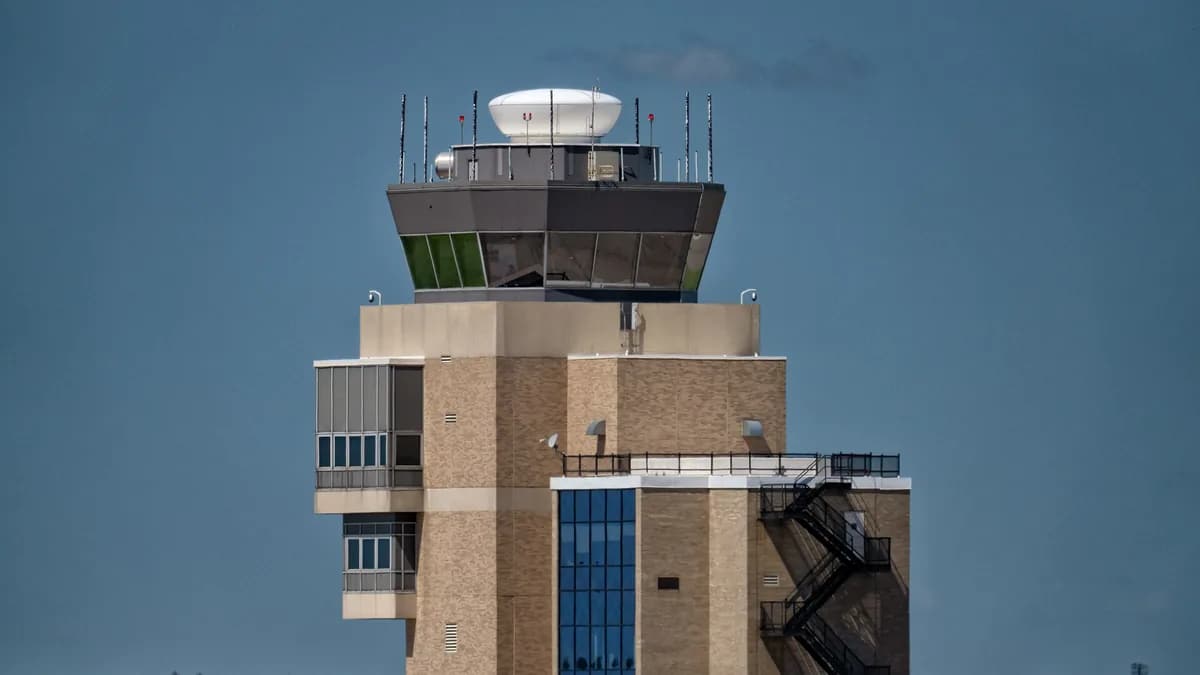
ARTCCs are the Air Route Traffic Control Centers, the en route facilities. TRACONs, short for Terminal Radar Approach Control, work from inside those centers, according to Transportation Secretary Sean Duffy. The FAA said the problem hit multiple ARTCCs. Duffy’s post on X said it hit all of them.
Think of FTI as the pipe and the centers as the buildings that depend on what flows through it. Duffy said the TRACONs saw inconsistent data from radars and from aircraft communications. When controllers can’t trust what’s on the screen, shutting down departures is the cautious call. The FAA Command Center also lengthened the flight plan drop window to 240 minutes across the en route centers, pointing to a comms failure nationwide.
Three explanations for one outage
Officials haven’t agreed on a cause. The accounts overlap, but they point at different culprits:
- Old equipment. At a White House briefing, Duffy said switches and routers were overloaded with data and produced inconsistent readings, so the system was shut down. He called the devices analog and said the system runs on 1980s-era copper lines. Each of those remarks appears in only one source.
- New patches. Homeland Security Secretary Markwayne Mullin said the outage came from adding patches and new equipment. As Wired reports it, he described the newer technology as putting more load on the older system than it could handle.
- A vendor update. CBS News, citing multiple sources, reported that an update to the private network operated by L3Harris caused a reboot and the outage. L3Harris hasn’t confirmed that.
These aren’t strictly rivals. An update pushed into aging gear could overload it, which would make all three partly right. But officials haven’t said so, and Duffy blamed age while Mullin blamed what was added.
How can patching old and new gear cascade nationwide?
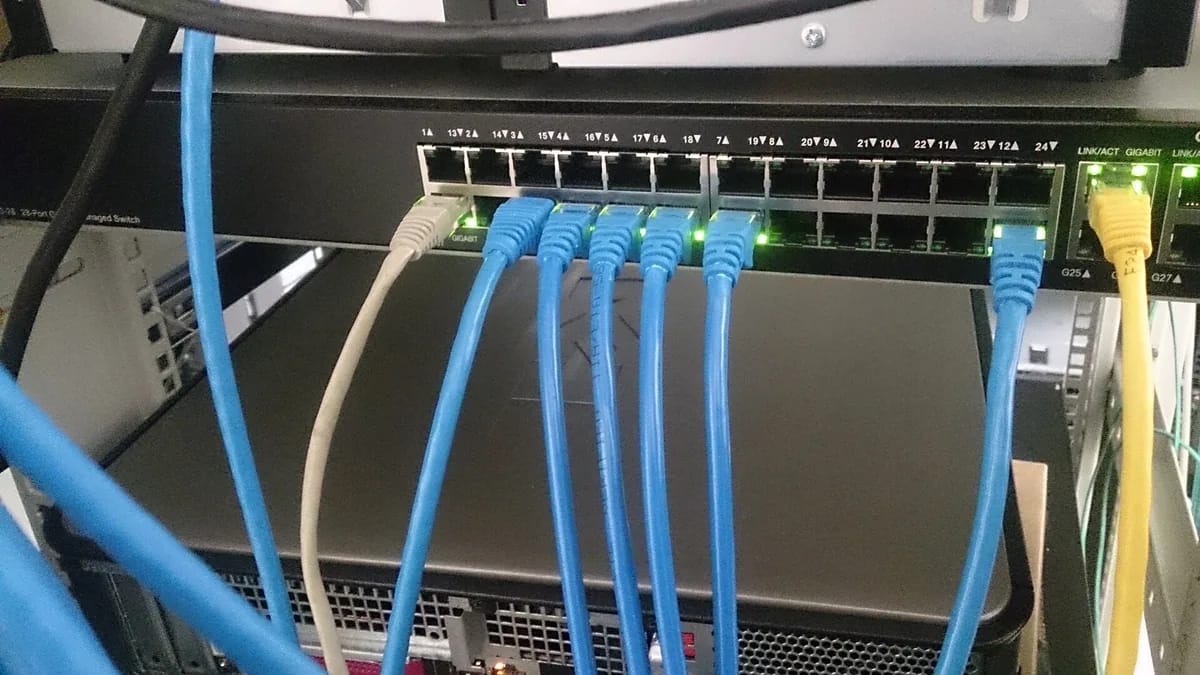
Officials haven’t described the mechanism, so this part is inference. A network that’s 70% fiber and 30% legacy is two networks stitched together, and every seam is a place where data can arrive late, doubled or garbled. Duffy’s description, switches overloaded and inconsistent data, fits that pattern.
Why nationwide? Because the centers share the same backbone. If bad data can show up in Chicago and then Boston, Washington, New York and Minneapolis within the same event, that suggests a shared dependency rather than a string of unrelated faults. Whether the backbone had any fallback is an open question.
Both officials said there was no sign of a cyberattack. Mullin later said it appeared mechanically driven, but added that he wasn’t completely certain yet. He also said there was no link to the recent Microsoft Outlook outage.
Duffy said the new SMART airspace system, which went live nationwide November 10, is completely disconnected and unrelated. Its builder, Air Space Intelligence, also denied any connection. The timing, three days after activation, will keep that question alive until the FAA publishes findings.
Why it matters if you fly or run infrastructure
If you have travel this weekend, expect knock-on trouble. FlightAware showed 5,901 flights canceled and 9,124 delayed at 8:39PM ET, per The Verge. Wired, citing FlightAware, put the figures at over 6,300 canceled and 9,500 delayed when the stop was lifted. Cirium counted about 11,000 flights and 1.5 million passengers scheduled to depart after 4PM ET. Crews have hit duty-hour limits and aircraft are out of position, so recovery will take days. CNBC reported that JetBlue told staff it would cancel the rest of Friday’s flights except European routes, plus some Saturday flights. That comes from one memo.
Check your airline’s app before heading to the airport. If you’re checking a bag on a weekend of reshuffled flights, an Apple AirTag tucked inside lets you see where it ended up.
For IT and infrastructure people, the lesson is old and uncomfortable. A migration means running two systems at once, and the transition period carries its own risk. A September GAO report, as Wired reports, warned that the FAA’s accelerated modernization could favor speed over cost and disruption risk. It found no well-documented life-cycle cost estimate and 11,389 unintegrated schedules.
Duffy’s own forecast isn’t comforting. He said of the system: It’s going to continue to fail.
(CNBC) He asked Congress for emergency funding, raising his ask from $30.1 billion in a letter earlier that day to $50 billion at the briefing. The administration aims to overhaul air traffic control by the end of 2028.
There’s precedent for national halts, though rarely like this. The last one was in January 2023, after contractors accidentally deleted files in the NOTAM system. The Verge and CNN put it at about 90 minutes. Before that you have to go back to the September 11, 2001 attacks.
What we still don’t know
Plenty. The FAA’s investigation was still open Friday night. Nobody has said which component failed first: the FTI network, switches at the centers, or something else. It’s also unclear whether a patch or an L3Harris update triggered it, or whether age alone did.
Officials haven’t said how they’ll reconcile their different accounts, what accountability L3Harris faces, or why a failure in one place could stop departures everywhere with no fallback. The cyberattack question is hedged rather than closed. And nobody has said how long airline schedules will take to recover or what passengers will be owed.
Tools & products mentioned
- Apple AirTag on Amazon — Check current price
Disclosure: some links in this article are affiliate links or our editor's own courses and book. If you buy through them, TechyCluster or its editor may earn money at no extra cost to you. This does not influence what we cover or how we cover it. As an Amazon Associate, TechyCluster earns from qualifying purchases.
Frequently asked questions
Why did the FAA issue a nationwide ground stop?
The FAA cited a communications issue affecting multiple Air Route Traffic Control Centers. Transportation Secretary Sean Duffy said it affected all of them. The cause itself is disputed.
Is the FAA ground stop over?
Yes. It was lifted at 8:15PM ET on Friday, November 13, 2026, and the FAA described a tiered, gradual release of traffic. Delays and cancellations are expected to continue through the weekend or longer.
Was the FAA outage a cyberattack?
Homeland Security Secretary Markwayne Mullin said there was no indication of one, and later that it appears mechanically driven. He added there's not complete certainty right now.
How many flights were canceled?
It depends on the snapshot. FlightAware showed 5,901 canceled and 9,124 delayed at 8:39PM ET, per The Verge. Wired, citing FlightAware, reported over 6,300 canceled and 9,500 delayed when the stop was lifted.
When was the last nationwide ground stop?
January 2023, after contractors accidentally deleted files in the NOTAM system. Before that, the last was after the September 11, 2001 attacks.
Get the next one in your inbox. One email a day with the tech stories that matter, explained in plain English. Subscribe free.
Sources
This article was compiled from reporting by the following outlets. Links go to the original reports.
- Axios: FAA ends hours-long nationwide ground stop
- The Verge: FAA lifts nationwide ground stop that blocked takeoffs for hours
- SecurityWeek: FAA Ground Stop Issued Due to ‘Extraordinary Circumstances’
- PCMag: FAA's Ground Stop Lifted, Outage Tied To Air Traffic Control Upgrades
- Wired: The FAA Nationwide Ground Stop Is Over
- CNBC Top: FAA lifts ground stop after more than four hours, but flight cancellations will stretch into the weekend

