

Key takeaways
- YouTube Music began adding an AI label to songs created or significantly altered with generative AI, with a rollout date of Oct. 14 according to 9to5Google's URL.
- Only Bandcamp has a confirmed outright ban on AI music, and only Deezer is described as offering a filter; YouTube's label is, so far, information only.
- Spotify's approach is described two ways: a voluntary label, per The Verge, and labeling of 'fake artists,' per Engadget.
- Apple Music's AI tag is reported, not confirmed, so don't choose a service around it yet.
YouTube Music has started putting an AI label on songs that were created or significantly altered with generative AI. The rollout began in the YouTube Music app, with the date Oct. 14 appearing in 9to5Google’s URL, and the main YouTube app is due to follow at a time YouTube hasn’t named.
That makes YouTube the latest service to take a position on AI songs. The positions differ a lot: a label, a filter, a ban, a recommendation limit. If you’re deciding where to listen, the difference matters more than the headline.
How do the five services compare?
They split into four approaches. YouTube Music labels, Spotify labels and limits recommendations, Deezer filters, Bandcamp bans. Apple Music is reportedly preparing a tag. The lineup, as reported:
- YouTube Music: a badge on the player screen for AI-made or AI-altered tracks. No filter or skip option has been reported.
- Spotify: a voluntary AI label introduced in 2026, plus a pledge not to recommend songs from ‘AI personas,’ per The Verge.
- Deezer: a switch to remove AI tracks from your listening.
- Bandcamp: has barred AI music entirely, a policy that dates to earlier in 2026.
- Apple Music: reportedly getting an AI tag. Not confirmed.
What does the YouTube Music label actually do?
It tells you a track involved generative AI. A small AI badge with an info icon sits on the Now Playing screen, directly under the track name next to the artist or channel, according to 9to5Google and Engadget. Tap it and a ‘How this was made’ sheet opens, which says the track’s audio was changed or entirely produced with AI.
One wrinkle: The Verge says the label itself reads ‘Made with AI.’ 9to5Google and Engadget say the badge reads ‘AI’ and that ‘Made with AI’ shows up only in the explanatory sheet. Small point, but you’ll know what to look for.
YouTube’s example of a qualifying track is one where a generative model made the composition and vocals. The company says it finds these songs by working with music partners and by using its own detection tools. Partners get rules for disclosing AI use, and if they don’t disclose, YouTube says it may use ‘other signals’ to decide.
What the label doesn’t appear to do is change what you hear. Nothing in the reporting says labeled tracks are hidden, skipped or ranked lower. Android Authority framed the feature as a way for people who dislike AI songs to steer clear of them, but that’s avoidance by eye, one song at a time.
Spotify: label first, then a recommendation limit
Spotify is the closest match to YouTube, with one extra piece. The Verge reports that Spotify introduced a voluntary AI label in 2026 and separately promised not to recommend songs from AI personas. A label plus a restriction on what the algorithm pushes is a stronger stance than a label alone.
The sources don’t line up perfectly here. Engadget describes Spotify as having begun labeling ‘fake artists,’ which isn’t the same as a voluntary disclosure label. Both could be true, or the outlets could be describing different features. Spotify’s own wording wasn’t part of what’s been reported, so treat the details as unsettled.
‘Voluntary’ is the word to hold onto. A disclosure label only works as well as the people filling it in, which is why YouTube pairs its own with detection tools.
Deezer and Bandcamp go further
Deezer gives you a way to remove AI tracks from what you listen to, and Bandcamp doesn’t host AI music at all. Those are the two services where an AI-averse listener has a real lever, not just a warning sign.
Caveat on Deezer: The Verge says it has already added a switch to filter AI tracks, while Engadget describes it as implementing a filtering system. If this is the feature you care about, check the app yourself before you switch.
Bandcamp’s ban dates to earlier in 2026, per The Verge. How it enforces the ban hasn’t been reported in what I have. A ban is the cleanest policy to explain and probably the hardest to police, but that’s my judgment, not something the coverage says.
Apple Music: a reported tag
Apple Music is reportedly getting an AI tag, according to The Verge. That’s all anyone has said. No launch date, no design and no word on whether Apple will use disclosure, detection or both. Until Apple announces something, it belongs in the ‘wait and see’ column.
Which service should you pick?
It depends on what bothers you. If you just want to know when a song is AI-made, YouTube Music, Spotify and eventually Apple Music do that. If you want AI music out of your queue, Deezer’s filter or Bandcamp’s ban are the only options described so far.
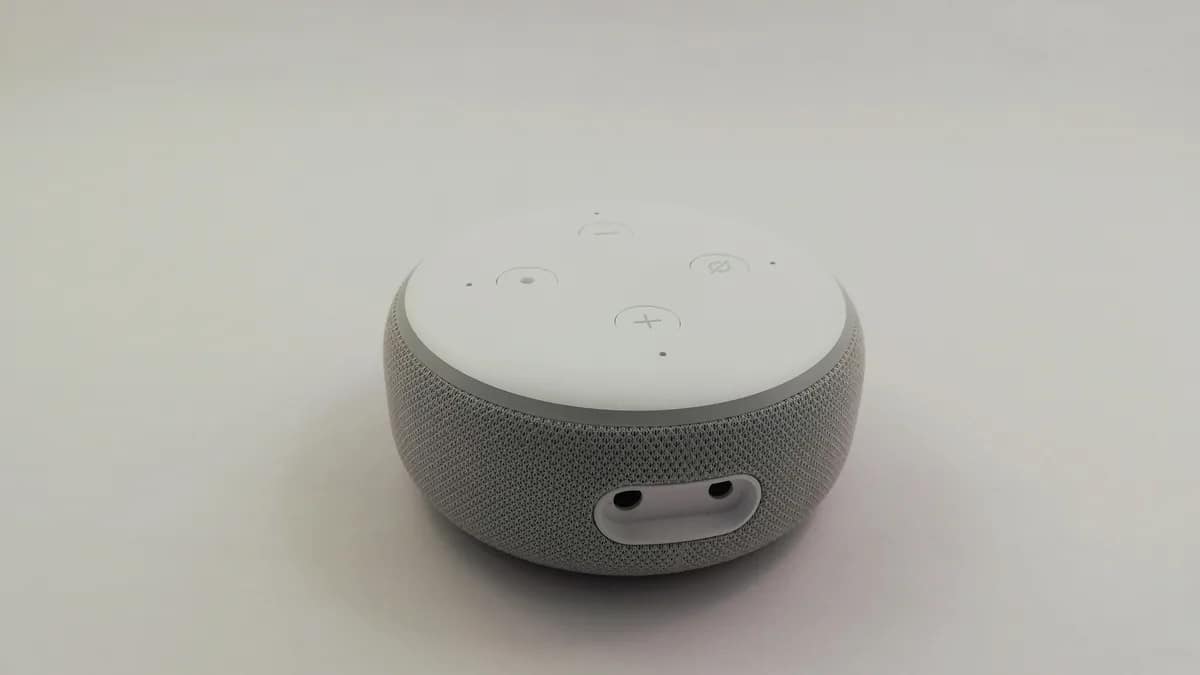
Two practical notes. First, YouTube’s label lives on the player screen, so it’s no use if you mostly listen through something screenless, like an Amazon Echo Dot. You’d hear the song without seeing the badge. Second, YouTube says it’s applying the same labeling principles it already uses for AI-altered video, and the main YouTube app hosts a lot of music, so the label will matter more once it lands there. If you make or watch AI video on the platform, our rundown of AI video generators for YouTube covers that side.
Labels are also part of a wider push to make AI content identifiable. Our explainer on AI regulation in 2026 shows where lawmakers sit on that.
My view: a label is a reasonable first step and a poor last one. It informs you, but it leaves the work with you.
What nobody has said yet
The biggest gap is the threshold. Outlets describe the trigger differently: ‘altered or fully generated,’ ‘created primarily using generative AI,’ and ‘where AI played a significant role.’ YouTube hasn’t said where AI-assisted mastering, stems or other production tools fall, and it’s reported that not every use of AI in music-making triggers the label.
Other open questions:
- How accurate YouTube’s detection is, and what happens to a human-made track that gets mislabeled.
- Whether artists or labels can appeal or remove a label.
- Whether labeled tracks will be demoted, filtered or left out of recommendations. None of that has been announced.
- What penalties apply to music partners who don’t disclose AI use.
- Whether the rollout hits every user and region at once. 9to5Google said users will ‘soon see’ the label, which hints at a gradual release.
- When the main YouTube app gets it, and whether it covers user-uploaded videos with music.
YouTube’s statements also come as unnamed company text, with no spokesperson attached. TechCrunch, Deadline, Mashable and Music Business Worldwide also covered the story, but I only have their headlines, so I’m not drawing on their details.
Tools & products mentioned
- Amazon Echo Dot on Amazon — Check current price
Disclosure: some links in this article are affiliate links or our editor's own courses and book. If you buy through them, TechyCluster or its editor may earn money at no extra cost to you. This does not influence what we cover or how we cover it. As an Amazon Associate, TechyCluster earns from qualifying purchases.
Frequently asked questions
How do I know if a song on YouTube Music is AI-generated?
Look under the track name on the Now Playing screen. A small AI badge with an info icon appears there, and tapping it opens a 'How this was made' sheet. The rollout may be gradual, so you might not see it yet.
Can I filter out AI music on YouTube Music?
No filter has been reported. The label is informational, and nothing in the coverage says labeled tracks will be hidden, skipped or demoted. Deezer is the service described as having an AI filter.
When will the AI label come to the main YouTube app?
YouTube says it's coming later but hasn't given a date. It's also unclear whether it will cover user-uploaded videos that contain music.
Does Spotify label AI-generated songs?
The Verge reports that Spotify introduced a voluntary AI label in 2026 and promised not to recommend songs from AI personas. Engadget describes it as labeling 'fake artists,' so the details differ by outlet.
How does YouTube detect AI-generated music?
YouTube says it works with music partners, who are asked to disclose generative AI use, and uses its own detection tools. If a partner doesn't disclose, it may use 'other signals.' Accuracy hasn't been published.
Get the next one in your inbox. One email a day with the tech stories that matter, explained in plain English. Subscribe free.
Sources
This article was compiled from reporting by the following outlets. Links go to the original reports.
- The Verge: YouTube sticks new labels on AI-generated songs
- 9to5Google: YouTube Music rolling out AI labels in the Now Playing screen
- Android Authority: Hate AI songs? YouTube Music will now label tracks so you can avoid them
- Engadget: YouTube Music adds new labels for AI-generated content
- TechCrunch: YouTube Music launches new labels as AI-generated music floods streaming platforms
