Key takeaways
- The Surface Laptop Ultra runs on Nvidia's RTX Spark N1X Arm chip, and Ars Technica lists its price range as $2,599 to $5,899.
- In Tom's Hardware testing, it beat the MacBook Pro (M5 Max) by one second in a Handbrake transcode but fell well short on Geekbench 6.
- Reviewers found battery life weaker than the MacBook Pro's and fan noise heavy, and two say Windows 11 isn't yet making full use of the chip.
- The 24GB base model ships with Windows 11 Home; higher-memory models ship with Windows 11 Pro, and Ars ran a 70-billion-parameter AI model on its 64GB unit.
Microsoft’s Surface Laptop Ultra, built on Nvidia’s new RTX Spark N1X Arm chip, is on sale from $2,599, and the first reviews call it a strong but expensive MacBook Pro rival. If you don’t plan to run big AI models on it, the case for paying that much is thin right now. If you do, it’s the reason the machine exists.
What does $2,599 get you?
A 15-inch mini-LED screen, a very large haptic trackpad, three USB4 ports and an Arm chip with Nvidia graphics, all in a conventional aluminum clamshell. Ars Technica lists the Surface’s range as $2,599 to $5,899. PCMag says RTX Spark laptops in general start at $2,599.
That’s two slightly different claims, and the configurations at each price point haven’t been spelled out. Treat $2,599 as the floor, not what most buyers will pay.
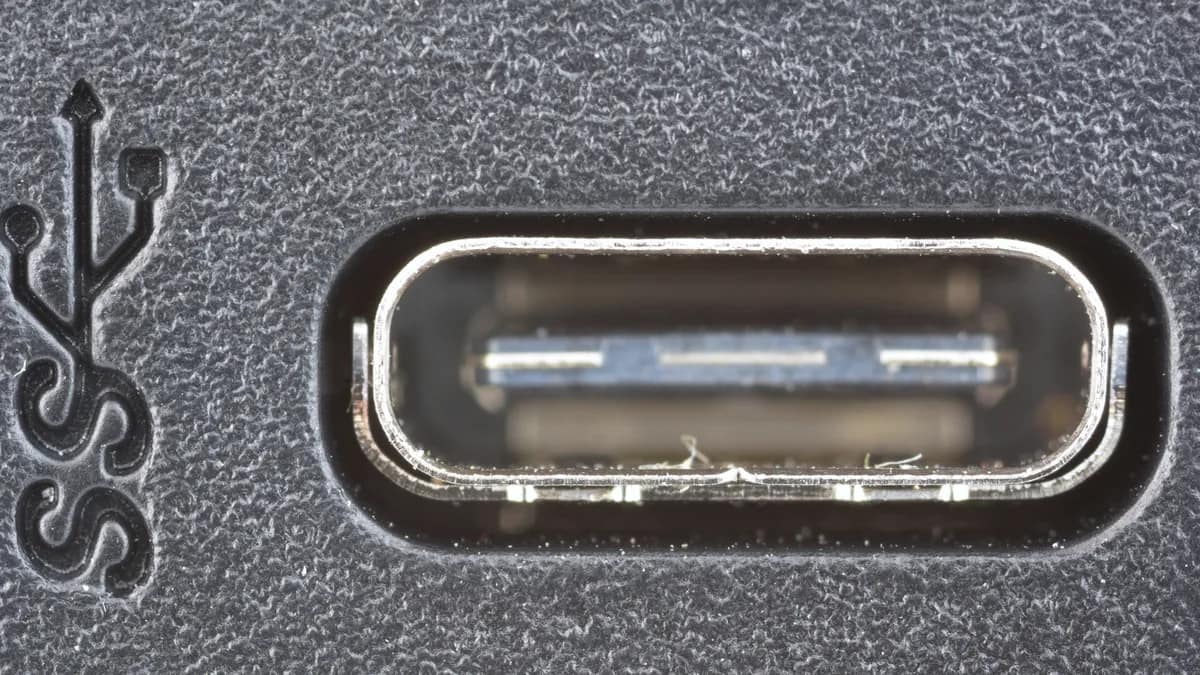
The display is the part nobody argues about. It’s 3270×2180 with a 2,000-nit peak, and reviewers describe it as exceptionally bright, with deep blacks and no visible blooming. Ars does note glare in bright rooms because of the glossy glass. The trackpad measures 5.5 by 3.5 inches. Tom’s Hardware lists three USB4 Type-C ports (140W charging, 40 Gb/s each), HDMI 2.1b and USB Type-A, plus a headphone jack, an SD card reader and Wi-Fi 7.
Microsoft also added a Magnetic Connect charger, a MagSafe-style magnetic connection that fits only the wider USB-C port at the top right. Ordinary USB-C charging works on all the ports. Two outlets praised the clear repair labeling inside. A few annoyances: no finger lip or notch on the lid, so one-handed opening is awkward, and the machine weighs 4.4 pounds.
How does it compare with the MacBook Pro?
It’s mixed. In Tom’s Hardware testing, the Surface fell well short of the MacBook Pro (M5 Max) on Geekbench 6 but won a Handbrake 4K-to-1080p transcode by one second. Reviewers found battery life weaker and fan noise heavy.
The Geekbench numbers on Tom’s unit were 3,151 single-core and 20,203 multi-core. Tom’s points out that Geekbench is a bursty workload, so that’s not a general verdict. The Handbrake result is closer to what a video creator does all day: the next-closest machine, an Asus Zenbook with a Snapdragon chip, took 2:08.
On weight, Tom’s compares the Surface’s 4.4 pounds with 3.56 pounds for the 14-inch MacBook Pro with M5 Max. Wired used the 16-inch model for its comparison, so those two figures don’t line up. No one has published battery numbers yet, only the reviewers’ verdict that it trails Apple’s.
One caution applies to everything above. Reviewers used units supplied by Microsoft, and Ars says it saw performance before drivers matured. Microsoft says software and drivers will improve in a few months.
Windows 11 hasn’t caught up to the chip
Two reviewers say Windows 11 isn’t making full use of RTX Spark, and Tom’s Hardware describes a beautiful laptop still waiting on the operating system. If your work isn’t AI models, you’re paying for capability Windows mostly doesn’t use yet.
The AI PC label is contested. Wired’s headline calls the Surface the first real AI PC, which is the reviewer’s opinion. TechSpot’s review roundup says the laptop is currently missing all Copilot+ features, a claim the other outlets don’t confirm. Tom’s says Windows doesn’t exploit the chip beyond AI-model workloads.
Games are a split decision too. Ars saw AAA titles run at a speed and fidelity it didn’t think possible on Arm a year earlier, helped by years of Microsoft and Qualcomm compatibility work. TechSpot says some very popular games aren’t supported yet and that emulation causes hiccups. Which games, exactly, isn’t named.
Which memory tier: 24GB, 32GB or 64GB?
The 24GB base model ships with Windows 11 Home, and higher-memory models ship with Windows 11 Pro. Tom’s Hardware tested 32GB; Ars tested 64GB. Per-tier prices haven’t been published, so check the exact configuration before you compare against a MacBook Pro.
- 24GB: Ars questions whether it’s enough, since Windows 11 is memory-hungry and some memory goes to VRAM for gaming. Microsoft’s only answer on the base model was that it’s useful for smaller models locally. I’d skip it at this price.
- 32GB: The configuration Tom’s tested, with 20 CPU cores, 6,144 CUDA cores and 1TB of storage. It’s the most sensible middle for creators and developers who don’t plan to host large models.
- 64GB: The tier on which Ars ran a 70-billion-parameter AI model locally. If local models are the point, start here.
Windows Home versus Pro mostly settles itself, since memory decides which edition you get. If you need Pro, you’re buying above the base tier anyway.
What about the HP, Dell and Asus versions?
They’re coming, and details are thin. HP’s OmniBook Ultra, Dell’s XPS 16 Creator Edition and Asus’s ProArt series will also use RTX Spark. The Surface is the thickest of the N1X laptops and the HP is the thinnest. Prices, specs and battery results for the others aren’t yet reported.
If a 4.4-pound machine bothers you, the HP is the one to watch. A CNET first look at the HP OmniBook Ultra 16 has been published, and Ars says its review of the Asus ProArt is coming from Ryan Whitwam. I’d wait for those before committing, especially since the Surface’s main rivals haven’t had a full test yet.
Who should buy now, and who should wait
Buy now if local AI is your workload. Wait if you mostly want a fast Windows laptop for everyday creative or development work. A MacBook Pro with M5 Max is the safer pick today if battery life and a lighter bag matter more than Nvidia graphics.
Sigil Wen, an AI developer who makes Underdog.AI, is partnered with Nvidia and was the first RTX Spark buyer at the San Francisco Best Buy launch. His pitch, as a personal view: "Basically, it’s free ChatGPT." He added that he’d rather have AI that’s "private and personal, and on-device." That’s the appeal: high-capacity memory lets you run large models locally and privately instead of paying OpenAI or Anthropic. Calling it free is a stretch when the laptop costs $2,599 and up.
Other buyers weren’t as enthusiastic. PCMag counted more than 100 people in line at the Best Buy launch, but saw only a handful of purchases. Many came out of curiosity or for free swag, and several said the laptops are too expensive. Nvidia raffled five laptops signed by Jensen Huang, and many attendees left after the winners were announced. The thin turnout of buyers is PCMag’s impression, not a sales figure.
Don’t expect a price break soon. Ars says Q3 2026 PC shipments fell 20% year over year and blames an AI-driven RAM price surge. PCMag says the memory shortage is expected to last two years or longer, so RTX Spark prices will likely stay elevated for now.
What nobody has answered yet
The biggest gaps are on-sale details and long-term software support. Final review scores and full benchmark results also aren’t available yet.
- The exact on-sale date and which Surface configurations are available at each price.
- When Windows updates will bring out more of RTX Spark, and when Copilot+ features arrive.
- Whether 24GB is enough for gaming and local AI once VRAM is carved out.
- Real battery numbers against MacBook Pro models.
- Which popular games don’t run on the Arm platform, and how quickly emulation improves.
- Whether a cheaper RTX Spark laptop shows up, and how the HP and Dell models are priced.
Tools & products mentioned
- HP OmniBook Ultra on Amazon — Check current price
Disclosure: some links in this article are affiliate links or our editor's own courses and book. If you buy through them, TechyCluster or its editor may earn money at no extra cost to you. This does not influence what we cover or how we cover it. As an Amazon Associate, TechyCluster earns from qualifying purchases.
Frequently asked questions
How much does the Surface Laptop Ultra cost?
Ars Technica lists a range of $2,599 to $5,899. PCMag says RTX Spark laptops in general start at $2,599. Which configurations sit at each price isn't confirmed.
Is the Surface Laptop Ultra better than the MacBook Pro?
It depends on the task. In Tom's Hardware testing it won a Handbrake transcode by one second but fell well short on Geekbench 6. Reviewers found its battery life weaker than the MacBook Pro's.
Does the Surface Laptop Ultra come with Windows 11 Home or Pro?
The 24GB unified-memory model ships with Windows 11 Home. Higher-memory models ship with Windows 11 Pro.
Can the Surface Laptop Ultra run PC games?
Yes, with caveats. Ars saw AAA games run at a speed and fidelity it didn't think possible on Arm a year earlier. TechSpot says some very popular games aren't supported yet and emulation causes hiccups.
Get the next one in your inbox. One email a day with the tech stories that matter, explained in plain English. Subscribe free.
Sources
This article was compiled from reporting by the following outlets. Links go to the original reports.
- TechSpot: First Surface Laptop Ultra reviews: a promising but pricey MacBook Pro rival
- Wired: Microsoft Surface Laptop Ultra Review: The First Real AI PC
- PCMag: Nvidia's RTX Spark Event in San Francisco Attracts Long Lines, But Few Buyers
- Tom's Hardware: Microsoft Surface Laptop Ultra review: RTX Spark in a straight-up beautiful Windows PC
- Ars Technica: The Surface Laptop Ultra delivers on most of Microsoft's promises
- PCMag: Nvidia's RTX Spark Event in San Francisco Attracts Long Lines, But Few Buyers