
Key takeaways
- Blue Origin announced a $330 million Rocket Park expansion in Florida, due to finish in summer 2027, with the aim of launching New Glenn several times a week by decade's end.
- New Glenn has flown only two or three times depending on the outlet, and a May 2026 pad explosion destroyed much of its only launch infrastructure.
- Blue Origin and Jeff Bezos say the rocket could fly again before 2026 ends, but that's a target, and Bezos joked it would probably be Dec. 31.
- Blue Origin has asked the FAA to raise LC-36 from 12 to 50 launches a year, which is still short of one launch per week from that pad alone.
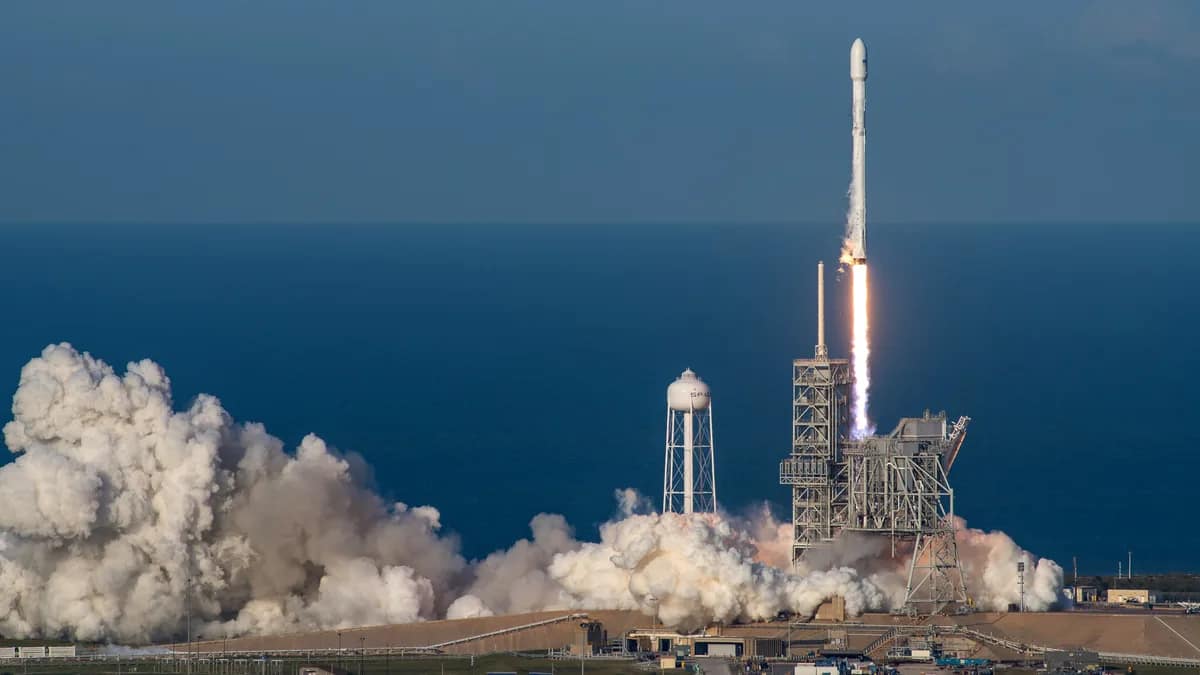
Blue Origin said Friday, Oct. 16, 2026, that it will spend $330 million expanding its Rocket Park campus in Florida. The plan covers more launch pads, an upper-stage factory, more landing ships and a new customer integration facility, all meant to get New Glenn flying several times every week by decade’s end.
The rocket that has to carry that ambition is grounded. A New Glenn exploded on the pad in May. Building capacity is the easy part to announce. Flying is the part that hasn’t been proven.
What did Blue Origin announce for Florida?
Blue Origin published a blog post laying out a build-out in stages. Step one is the $330 million Rocket Park expansion, due to finish in summer 2027. It will support building up to 150 upper stages of the larger New Glenn 9×4 version, which CNBC says would be annually. PCMag and Ars Technica give the 150 figure with no time frame.
The company also plans two more New Glenn launch pads and two more landing ships to catch the first stage. It has one ship now, named Jacklyn after Bezos’s mother. A new customer integration facility, a joint project with the Space Force at its Cape Canaveral station, would let Blue prepare several missions at once. CNBC and Ars Technica describe one facility with four payload bays. PCMag reports two near LC-36.
The pad count is also described differently. Ars says the two new pads come on top of two already under construction. PCMag describes the two as additions to LC-36, which is under repair, plus a second pad in early construction next to it. The company blog is the document to check.
Senior vice president of operations Ian Richardson wrote that “this infrastructure is designed to support multiple flights per week by the end of the decade.” Ars frames the eventual goal as more than 100 rockets a year, a figure that appears only in its coverage.
The rocket has barely flown
New Glenn has a short flight record, and outlets disagree on how short. PCMag counts three launches: January 2025, November 2025 and April 2026, with boosters landed on the last two. Ars says Blue Origin has launched to orbit twice. Either way, the target is a flight rate that’s orders of magnitude beyond the history.
The current version, the 7×2, has seven BE-4 methane engines on the reusable first stage and two BE-3U hydrogen engines on the second. The 9×4 has nine and four. PCMag lists about 77 tons to low Earth orbit for the 9×4 against almost 50 tons for the 7×2, without saying whether those are metric or US tons.
The new factory exists to build 9×4 upper stages, and the 9×4 hasn’t flown. No flight date for it has been reported. Dave Limp, Blue Origin’s CEO, posted a video on X of the factory floor. PCMag says it appeared to show dozens of second stages, which is its read of the footage, not a company number.
The May explosion is the checkpoint that counts
New Glenn exploded on the pad in May 2026, destroying much of its only launch infrastructure and grounding the rocket. Blue Origin is rebuilding LC-36 and says the rocket could fly again before 2026 ends. Everything else in the announcement depends on that happening.
Bezos told Fox News anchor Brett Baier in October that the return would come “sometime in December,” then joked it would probably be Dec. 31. That’s a company target, delivered with a laugh. I wouldn’t treat it as a commitment.
There’s a regulatory piece too. Blue Origin has asked the FAA to raise permitted LC-36 launches from 12 to 50 per year, according to PCMag. Fifty a year is a little under one a week from a single pad. PCMag expects Blue to seek a higher cap later given the new plans, but that’s its inference, not a company statement.
What caused the explosion hasn’t been reported in the coverage so far, and neither has whether the fixes are public.

Who pays for all this?
Blue Origin says it now operates at over 20 sites in Brevard and Orange counties, and the footprint has more than doubled in a couple of years. It has more than 5,000 employees in the state, and Ars adds 500 suppliers. CNBC puts Florida investment so far at more than $3 billion, while Ars says about $3 billion.
On funding, Limp told CNBC in September that the company’s first outside fundraising was oversubscribed. The Wall Street Journal reported that the round raised $10 billion at a $140 billion valuation. CNBC attributes those figures to the WSJ, and Blue Origin hasn’t confirmed them in the coverage. Only Limp’s remark is on the record.
The wider market is hot. Space Capital counted $92.5 billion of commercial space investment in the first three quarters of 2026, per CNBC. Against that, $330 million is a modest first step. The pads and ships that follow have no reported price.
What it means for investors and space watchers
If you follow space stocks or private-market valuations, the checkpoints are concrete: a December return to flight, the FAA decision on 50 launches a year, and whether the Rocket Park expansion finishes in summer 2027. A valuation that high rests on a rocket that has to fly first.
Customers are waiting. Amazon booked 12 New Glenn launches for its Amazon Leo broadband constellation, and other rockets have delivered just under 400 Leo satellites. NASA gave Blue Origin a $3.4 billion contract in 2023 for Blue Moon landers. One is expected to be checked out in Earth orbit by astronauts on Artemis III, planned for 2027.
Competition is shifting. Starship made orbit in September on its 14th flight, but the version flying today is built solely to put up Starlink V3 satellites, and SpaceX hasn’t published details of a general-purpose cargo version. CNBC says SpaceX has stopped offering commercial rides on Falcon 9 to prioritize Starship. PCMag is more cautious: it says SpaceX looks to be giving up much of the satellite-launch business, though Falcon 9 and Falcon Heavy still dominate. That gap could be an opening for Blue Origin, but only if its rocket flies.
For the backstory on the Bezos and Musk rivalry driving all this, Christian Davenport’s book The Space Barons is a readable place to start.
Open questions on timing, demand and cause
Several things are still missing. Blue Origin hasn’t said when the 9×4 will fly or when the new pads and ships will be ready. The cause of the May explosion hasn’t been reported. Whether the FAA will approve 50 launches a year, or what Blue would need to do to get there, is also unknown.
Demand is the other big gap. Amazon’s 12 launches are a start, but whether enough customers exist to fill multiple flights a week hasn’t been shown. It’s also unclear whether SpaceX’s move to Starship really opens the commercial market. And Blue Moon’s 2027 Artemis III role has to hold while New Glenn is grounded.
Even the plan’s details are murky: one integration facility with four bays or two, and two new pads or four in total, depending on the outlet. A December flight would answer the most important question first.
Tools & products mentioned
- The Space Barons on Amazon — Check current price
Disclosure: some links in this article are affiliate links or our editor's own courses and book. If you buy through them, TechyCluster or its editor may earn money at no extra cost to you. This does not influence what we cover or how we cover it. As an Amazon Associate, TechyCluster earns from qualifying purchases.
Frequently asked questions
How much is Blue Origin spending on its Florida expansion?
The first step is a $330 million expansion of the Rocket Park campus, due to finish in summer 2027. Costs for the extra pads, landing ships and integration facility haven't been reported.
When will New Glenn launch again after the explosion?
Blue Origin says the rocket could fly again before the end of 2026. Jeff Bezos said "sometime in December" and joked it would probably be Dec. 31. It's a target, not a commitment.
What is the difference between New Glenn 7×2 and 9×4?
The 7×2 has seven BE-4 engines on the first stage and two BE-3U engines on the second. The 9×4 has nine and four. PCMag lists about 77 tons to low Earth orbit for the 9×4 versus almost 50 for the 7×2.
How many launches per week does Blue Origin want?
Blue Origin wants its Florida infrastructure to handle several launches every week by decade's end. Ars Technica frames the eventual goal as more than 100 rockets a year.
Get the next one in your inbox. One email a day with the tech stories that matter, explained in plain English. Subscribe free.
Sources
This article was compiled from reporting by the following outlets. Links go to the original reports.
- PCMag: Blue Origin Unveils Plans for Massive Upgrade to Its Florida Facilities
- CNBC Tech: Blue Origin plans $330 million Florida expansion to ramp New Glenn launches
- Ars Technica: Blue Origin is going all in on the New Glenn rocket
- Ars Technica: Blue Origin is going all in on the New Glenn rocket