Key takeaways
- The FAA lifted its nationwide ground stop at 8:15 pm ET on Friday, Nov. 13, and no official root cause has been announced.
- Transportation Secretary Sean Duffy blamed old equipment, while Homeland Security Secretary Markwayne Mullin said new patches and equipment were overwhelming the older system.
- Wired reports that several outlets tied the failure to the FAA Telecommunications Infrastructure (FTI), a network L3Harris manages and that is midway through a copper-to-fiber upgrade.
- Officials say they've seen no sign of hacking but haven't ruled it out entirely, and delays were expected to last through Saturday, with full recovery by Sunday.
The FAA ordered a halt to all departing flights across the US on Friday, Nov. 13, after a communications failure hit its air traffic control network. It lifted the order at 8:15 pm ET. Officials blamed overloaded equipment and said they’d found no sign of hacking.
That’s where the clean part of the story ends. The explanations from officials and anonymous sources overlap but don’t match, and the pieces involved (a private network, a copper-to-fiber upgrade, a single contractor, two phone companies) are easy to tangle. For a blow-by-blow of the day itself, see our plain-English account of what broke.
What is FTI, and who runs it?
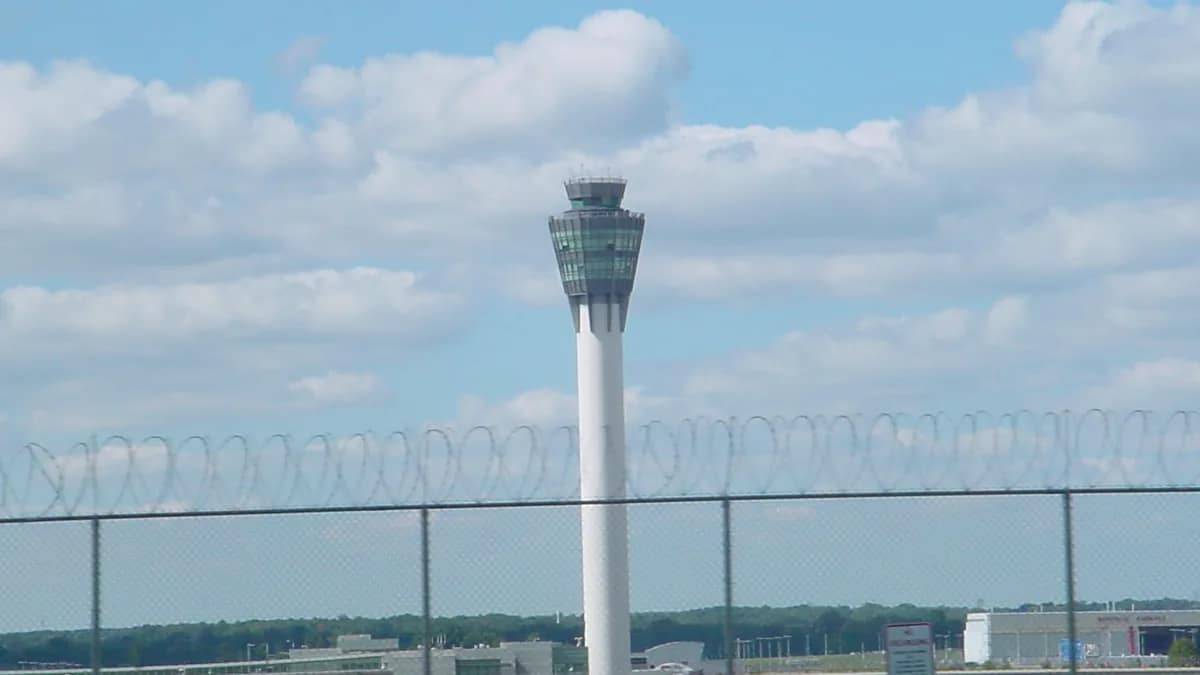
FTI stands for FAA Telecommunications Infrastructure. Wired describes it as the private communications backbone of the air traffic control system, and says L3Harris Technologies manages it. It isn’t a public internet service; it’s a network the FAA depends on to move communications between its facilities.
The FAA’s own statement on Friday was narrower. It cited communication issues affecting multiple Air Route Traffic Control Centers and said technicians were investigating. The FTI connection came from several outlets, per Wired, rather than from the agency’s initial notice.
One more caution: when Duffy spoke of a legacy system, Wired said he was likely referring to FTI. That’s Wired’s inference, not something Duffy spelled out.
Old copper or new fiber: which one failed?
Officials gave two different emphases. Duffy said old network switches and routers were overloaded with data and began giving inconsistent information, so the FAA shut the system down. He described the equipment as 1980s-era copper lines, which is his assertion and hasn’t been independently verified.
Mullin pointed the other way, at the upgrade. He said the FAA had been installing patches, new equipment and new technology, and that this was overwhelming the older system. Both can be partly true. A half-modernized network is, by definition, old and new gear running side by side.
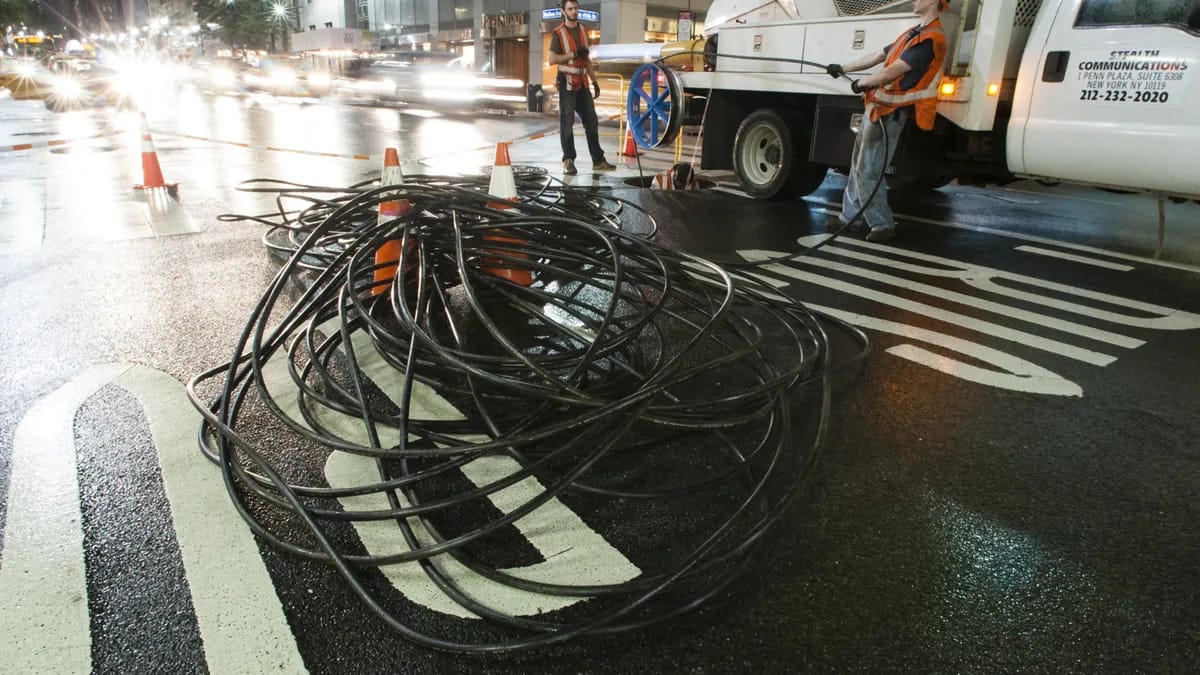
But the fiber numbers complicate Duffy’s framing. FTI is being modernized in a multiyear project replacing decades-old copper with fiber-optic cable. L3Harris said in May that it had completed 50% of that project, and earlier this month said 70% of FAA sites had been upgraded to fiber. If most sites already run on fiber, 1980s copper can’t be the whole story. How those two claims fit together hasn’t been explained.
How the AT&T, Verizon and L3Harris contracts fit
L3Harris runs the legacy system, and the FAA is midway through handing the network to something new. According to Wired, Verizon had previously been selected for the replacement, and in August the FAA picked AT&T to upgrade FTI to an entirely new system. Until the new system is live, L3Harris stays on as operator of the old one.
AT&T’s contract is worth $73 million, and Wired says it’s likely to grow into the billions.
That’s a lot of hands on one critical network: an incumbent operator, a new builder, and a switchover in progress. I wouldn’t read blame into that arrangement without evidence. But it’s the kind of setup where a change on one side can surprise the other, and the public record doesn’t yet say whether that happened here. An L3Harris spokesperson didn’t respond to Wired’s request for comment.
Our earlier piece on what the ground stop says about old TDM gear covers the older technology side of this.
What the anonymous reports add
Two unofficial accounts point toward a software or update trigger. CBS News, citing multiple sources, reported that an update to the private network tying air traffic control together came first, after which the network rebooted and crashed. CBS also said L3Harris operates it. Bloomberg, citing one person familiar with the matter, reported the FBI doesn’t believe a cyberattack or crime was behind the outage and is examining a software update as a possible cause.
Neither claim has been officially confirmed, and Bloomberg’s rests on a single anonymous source.
On hacking, officials have been consistent but not absolute. Mullin said there was no sign of a cyberattack and that nothing pointing to an intrusion had surfaced, according to SecurityWeek. He didn’t fully rule one out. The NSA, the Defense Department, CISA and other agencies have joined the probe. Wired reported that officials said they weren’t completely certain yet.
Officials also ruled out any link to a Microsoft outage earlier in the week, and said the FAA’s recently deployed AI systems played no role. Duffy added that the FAA’s SMART system was “not even plugged in.”
Why it matters if you fly
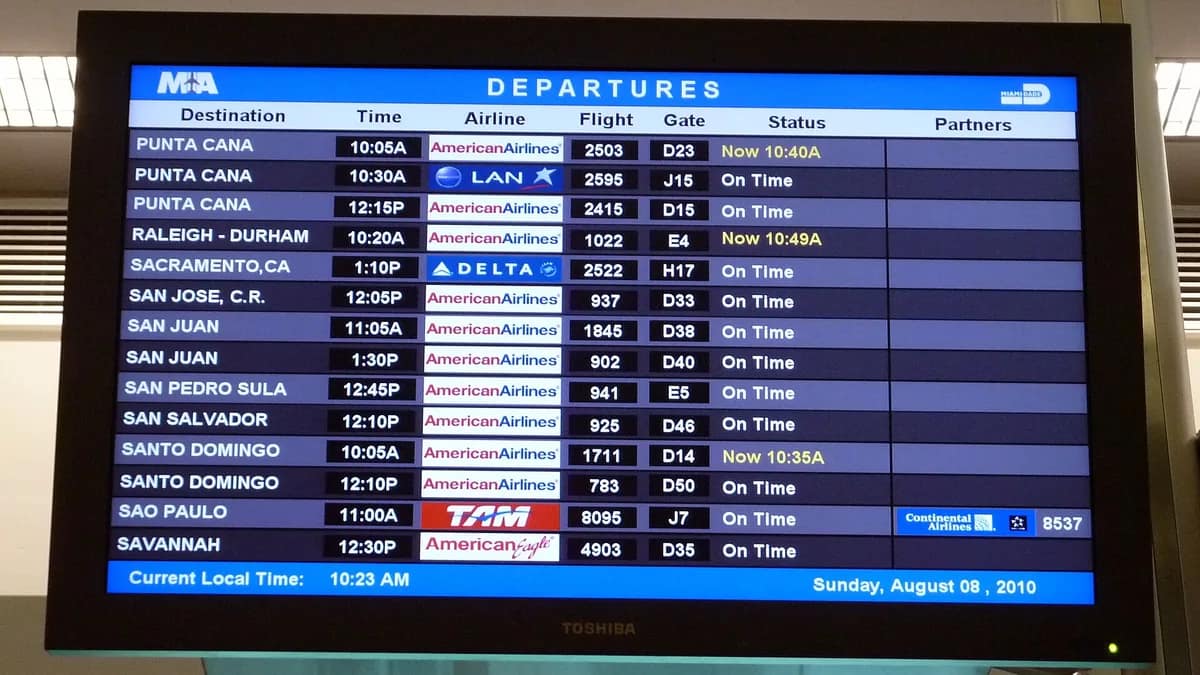
The ground stop is over, but the schedule damage isn’t. The FAA said airports were returning to normal on Saturday, with delays and cancellations continuing through that day, and officials expected full recovery by Sunday. Airlines, though, will need days and possibly weeks to reposition aircraft and crews, and freight and mail flights were affected too.
When the stop was lifted, FlightAware’s tally stood at more than 6,300 cancellations and 9,500 delays for flights to, from or inside the US, per Wired. Those totals will move. If you have a trip booked in the next couple of weeks, check your airline’s app before heading out, and expect knock-on trouble even if your own flight wasn’t touched Friday.
Length is reported differently. SecurityWeek said more than four hours; Wired said five. PBS called it the longest flight stoppage in 25 years, while Wired called it the most disastrous nationwide ground stop since September 11. Those rankings each come from a single outlet. The previous nationwide ground stop was in January 2023 and lasted nearly two hours, after contractors unintentionally deleted files in the NOTAM system. No cyberattack was found then either.
The effects reached beyond airports. College football kickoffs slid: Utah vs. Arizona started 3 hours late, and Auburn vs. Mississippi State was pushed back more than 4 hours. Ole Miss couldn’t fly to Oklahoma on Friday, so that game moved from Saturday to Sunday at 1 p.m. ET.
The money and the 2028 deadline
Duffy treats the outage as a case for speed. Earlier Friday he sent congressional leaders a letter requesting $30.1 billion for air traffic control and airport upgrades. At the briefing he said he wanted $50 billion. He also said doing nothing would add more risk, and warned: “Listen, it’s going to continue to fail.” The administration aims to overhaul air traffic control by the end of 2028.
A September GAO report pulls in a more cautious direction. It warned the FAA’s accelerated modernization could prioritize speed over cost and disruption, and found no well-documented life-cycle cost estimate and 11,389 non-integrated schedules instead of a master schedule. Whether that report was prescient or beside the point depends on a root cause nobody has named.
What nobody has explained yet
There’s no official root cause. Was it a software update, a patch, or equipment overload? Was the failure inside the FTI network L3Harris operates, and if so, does the contractor bear responsibility? Those questions are open.
The nationwide scope is the part I’d most like answered. Why did the system shut down everywhere rather than fail over to backups? Officials called the ground stop a precaution, and Mullin said it wasn’t a safety issue for the American people. That doesn’t tell us why one fault could reach so far.
Still unknown, too: what the NSA, CISA, DoD and FBI will conclude about hacking, whether Congress will back $30.1 billion or $50 billion, whether the modernization changes pace, and what compensation travelers may be owed. None of that has been reported yet.
Related gear
- Samsung T7 Shield 2TB portable SSD on Amazon — Related gear
Disclosure: some links in this article are affiliate links or our editor's own courses and book. If you buy through them, TechyCluster or its editor may earn money at no extra cost to you. This does not influence what we cover or how we cover it. As an Amazon Associate, TechyCluster earns from qualifying purchases.
Frequently asked questions
What caused the FAA nationwide ground stop?
No official root cause has been announced. Duffy blamed overloaded old equipment, Mullin said new patches and equipment were overwhelming the older system, and anonymous sources cited by CBS and Bloomberg point to a network or software update.
Was the FAA ground stop a cyberattack?
Officials say they've seen no sign of one, but Mullin didn't fully rule it out. The NSA, CISA and other agencies have joined the probe.
What is the FTI network?
FTI, the FAA Telecommunications Infrastructure, is the private communications backbone of the air traffic control system, according to Wired. L3Harris manages it, and it's being upgraded from copper to fiber.
Are flights back to normal after the ground stop?
The FAA said airports were returning to normal on Saturday, Nov. 14, with delays and cancellations continuing that day. Officials expected full recovery by Sunday, though airlines may need days or weeks to reposition planes and crews.
Get the next one in your inbox. One email a day with the tech stories that matter, explained in plain English. Subscribe free.
Sources
This article was compiled from reporting by the following outlets. Links go to the original reports.
- Axios: FAA ends hours-long nationwide ground stop
- SecurityWeek: No Signs of Hacking in FAA Ground Stop as FBI Reportedly Probes Software Update
- NPR: FAA ground stop disrupts college football
- PBS NewsHour: What to know about flights after the U.S. nationwide ground stop
- PCMag: FAA's Ground Stop Lifted, Outage Tied To Air Traffic Control Upgrades
- Wired: The FAA Nationwide Ground Stop Is Over