
Key takeaways
- Apple's new Apple Health AI Usage Study app is open to US adults 21 and older, with a participant target of up to 200,000 people.
- Answers come from OpenEvidence, a tool doctors use, and carry linked peer-reviewed citations, which is a different pitch from a general-purpose chatbot.
- TechCrunch reports the study runs more than 12 months, and it says it's unclear whether the answers will reach the Health app or Siri.
- Apple told ABC News the research is meant to inform future products and that it plans to share the findings broadly.
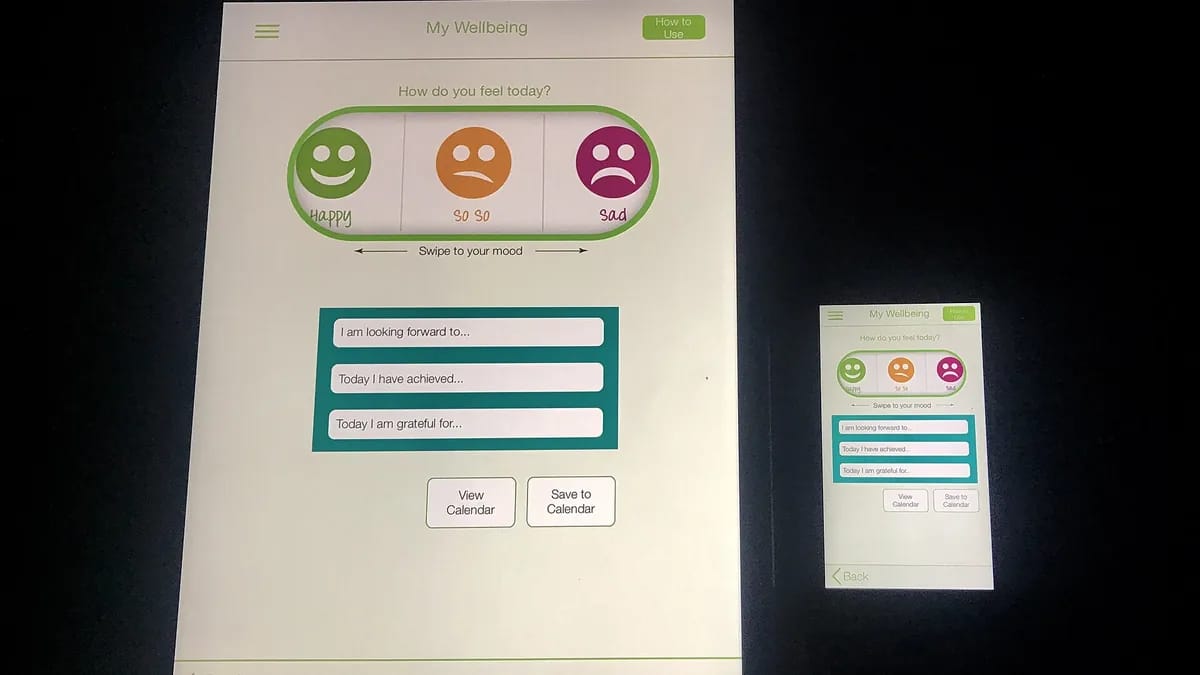
Apple launched a research app on Sunday that lets some US iPhone users ask health questions and get AI answers backed by medical research. It’s called the Apple Health AI Usage Study app, and Apple is building it with OpenEvidence. The target is up to 200,000 participants. Apple isn’t calling it a chatbot product. It’s calling it a study.
What did Apple actually launch?
Apple released a study app that answers everyday health questions with linked, peer-reviewed clinical citations, according to ABC News and TechCrunch. Its purpose is to research how people use and understand AI-generated health information. It is not a clinical product.
Participants can rate answers, leave feedback and take surveys. ABC says the surveys are occasional; TechCrunch says monthly. The app is also meant to help people prepare for doctor visits, and for worrying symptoms it points users toward specific providers. ABC adds that it has safeguards meant to spot potentially dangerous situations and push people toward professional care.
Why run a study instead of shipping a chatbot?
Apple hasn’t given a full explanation, and I won’t pretend it has. What it has said, per ABC, is that the research is meant to inform future products. The study’s stated measures are trust, how well people understand the answers, how helpful they find them, and whether the tool helps patients talk to their doctors. Those are product questions, answered before a product exists.
The Oxford finding ABC cites shows why that order might make sense. In a study published in Nature Medicine in February 2026, chatbots identified conditions in clinical cases with nearly 95% accuracy, but ordinary users landed on the correct answer in fewer than 35% of cases. That figure comes only from ABC’s account, so treat it as reported rather than verified here. If it holds, a model can be accurate and still fail the person typing into it.
Dr. John Brownstein of Harvard Medical School, who is also an ABC News contributor, put the risk plainly in ABC’s story:
“Confusing or incomplete information can create false reassurance or delay care.”
— Dr. John Brownstein, Harvard Medical School, via ABC News
Apple’s own framing is similar. Dr. Sumbul Desai, the Apple vice president responsible for Health and Fitness, said:
“Rigorously studying these experiences is essential to ensuring AI serves as a bridge, not a barrier, to better care.”
— Dr. Sumbul Desai, Apple, via ABC News
How does this differ from OpenAI and Anthropic?
TechCrunch frames Apple’s approach as a contrast. OpenAI and Anthropic have already launched health-capable chatbots with specialized features, and Apple is collecting evidence first. The fact sheet doesn’t detail what those features are, so I won’t guess.
The scale gap is hard to miss. TechCrunch reports that OpenAI says users send over 300 million health-related queries per week, though it gives no specific citation for the number. Queries and participants aren’t the same unit, so don’t divide one by the other. Still, one side is already running a vast uncontrolled experiment with ChatGPT, and the other is capping its first one at 200,000 consenting adults.
There’s a real trade-off here. Apple gets structured feedback, consent forms and surveys, and it can say what it learned. It also gives up months of market presence in a category where competitors already have habits forming. For a company that has historically preferred to arrive late and polished, that looks like a choice, not an accident.
The design choices that signal caution
Several details show Apple trying to avoid looking like a symptom checker. The answers are grounded in OpenEvidence, which doctors use and which is trained on sources like medical journals. TechCrunch says those include the New England Journal of Medicine, JAMA and Nature. Full OpenEvidence access is currently limited to health care professionals, and its answers use professional language, according to ABC. Apple says it uses its own technology to turn the research into simpler answers.
That last step is a weak point worth watching. Apple is adding a translation layer on top of a tool built for clinicians, and no source says how those simplified answers are checked for accuracy.
Other guardrails: participants must be 21 or older and complete an informed consent process. Apple also says the study isn’t a stand-in for a clinician and doesn’t track anyone’s health in real time. The app says so too.
Will this reach Siri or the Health app?
Nobody outside Apple knows. TechCrunch says it’s unclear whether Apple plans to bring AI-powered health answers to the Health app or Siri. Apple’s only public signal is that the research will inform future products.
My view: the most interesting piece is the optional data sharing. Participants can choose to share Health app and HealthKit data, including resting heart rate, activity, sleep and bloodwork or other lab results, so answers fit them better. ABC gives an illustration: a person asking how to lower their resting heart rate could get advice drawn from their own readings instead of generic tips. A standalone chatbot can’t easily match that. If Apple ships anything later, personalization from HealthKit is where it would have an edge, and this study is how it learns whether people trust that.
What it means if you own an iPhone
You need to be a US adult, 21 or older, with an Apple Intelligence-enabled iPhone running iOS 26 or later. The sources disagree on the floor: ABC says iPhone 15 Pro or later, TechCrunch says iPhone 15 or later. If you’re deciding whether an upgrade is worth it for this alone, I’d wait. An iPhone 15 Pro is the model both outlets name, but the rest of the line-up is unsettled, and a study app isn’t a reason to buy a phone.
On privacy, Apple says questions pass through protections that remove identifying information before reaching OpenEvidence, and that OpenEvidence deletes query and response data after 24 hours and doesn’t train its model on the queries. Those are Apple’s own statements, not independently verified. TechCrunch describes the data as anonymized before going to a secure third-party cloud provider, which isn’t the same description. Sharing HealthKit data is optional, so if you join, start without it and decide later.
For the industry, the takeaway is simpler. The company with the most health data on personal devices is treating AI health answers as something to measure before selling. If you’ve been using a general chatbot for health questions, the sensible habit holds either way: check anything important with a clinician, as the same readers who wonder whether they can trust an AI assistant with engineering calculations should ask about medical answers too.
What we don’t know yet
A lot. Apple hasn’t said where results will be published, what the formal endpoints are, or who sponsors the study or reviews its ethics. It’s also not clear how Apple will pick participants if more than 200,000 people sign up. Neowin says the study is open to 200,000, while TechCrunch says Apple is aiming for up to 200,000.
The anonymization details are thin, and the third-party cloud provider TechCrunch mentions isn’t named. It isn’t known whether OpenEvidence’s role changes its professional-only access model, or whether Android or non-US availability is planned. The 12-plus-month duration comes only from TechCrunch.
The biggest unknown is the one that matters for competitors: whether Apple’s results will ever show up in a shipped feature. OpenAI has been building consumer features elsewhere too, such as ChatGPT Wallet payments, so the contrast in pace is likely to keep growing.
Tools & products mentioned
- iPhone 15 Pro on Amazon — Check current price
Disclosure: some links in this article are affiliate links or our editor's own courses and book. If you buy through them, TechyCluster or its editor may earn money at no extra cost to you. This does not influence what we cover or how we cover it. As an Amazon Associate, TechyCluster earns from qualifying purchases.
Frequently asked questions
What is the Apple Health AI Usage Study app?
It's a research app from Apple, built with OpenEvidence, that lets participating US iPhone users ask health questions and get AI answers with linked medical citations. Its purpose is to study how people use and understand AI health information.
Who can join Apple's AI health study?
US adults 21 or older with an Apple Intelligence-enabled iPhone on iOS 26 or later who complete an informed consent process. ABC says iPhone 15 Pro or later; TechCrunch says iPhone 15 or later.
Is the app a medical tool?
No. Apple says the study isn't a substitute for a clinician and doesn't monitor anyone's health in real time, and the app says so. It's a research tool, not a diagnostic one.
Will Apple add this to Siri or the Health app?
Not announced. TechCrunch says it's unclear. Apple told ABC News the research is meant to inform future products and that it plans to share the findings broadly.
Get the next one in your inbox. One email a day with the tech stories that matter, explained in plain English. Subscribe free.
Sources
This article was compiled from reporting by the following outlets. Links go to the original reports.
- Neowin: Apple's new app aims to study how people use AI for health
- ABC News: Apple launches an AI health tool as part of a research study
- TechCrunch: Apple launches new app to study how people use AI for health
- Breaking News, Latest News and Videos: Apple launches an AI health tool as part of a research study – ABC News