
Key takeaways
- The Steelers released Aaron Rodgers on Wednesday, shortly after his interview on ESPN's The Pat McAfee Show and a day after making him inactive for Friday's game against Denver.
- Every allegation against coach Mike McCarthy comes from Rodgers alone; McCarthy denied the grudge claim and largely left the rest unaddressed.
- Rodgers appears often on McAfee's ESPN program, and NBC reports he once got a regular weekly paycheck for it, so the interview ran on a relationship the team had no seat in.
- Reports that ESPN sources both corroborate Rodgers and say McCarthy has full support are headline-only and can't be reconciled yet.
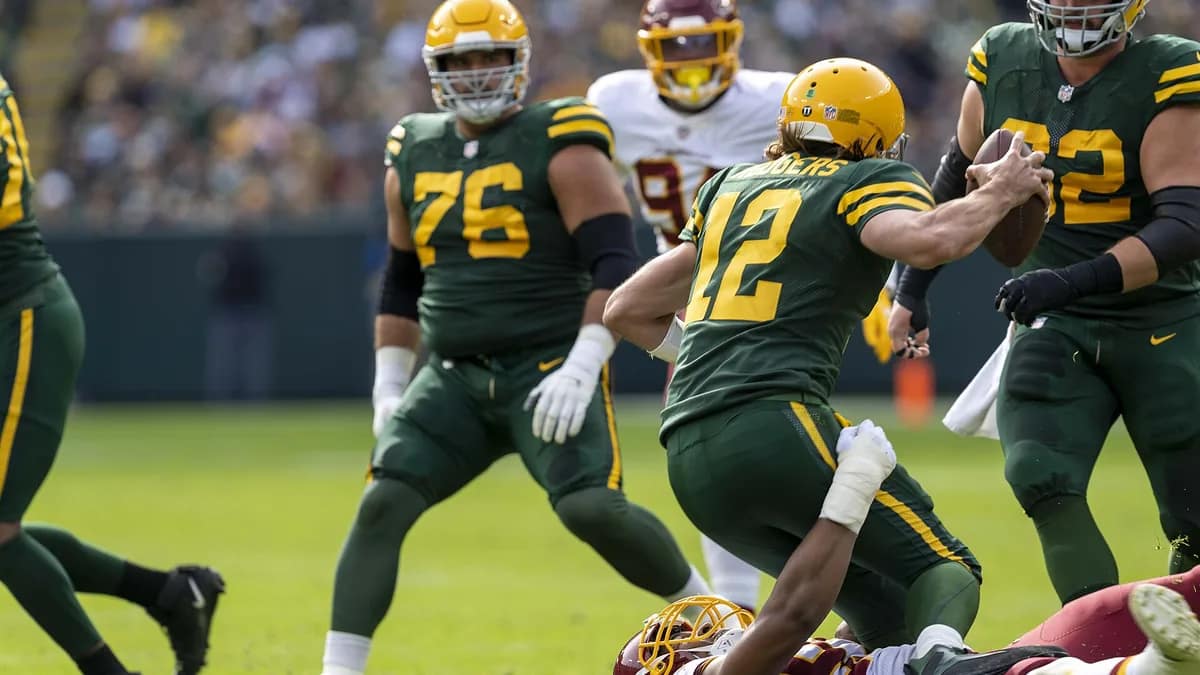
The Steelers cut quarterback Aaron Rodgers on Wednesday, soon after the 42-year-old criticized head coach Mike McCarthy in an interview with Pat McAfee. The team had announced Tuesday night that Rodgers would be inactive for Friday’s game against the Denver Broncos.
Plenty of outlets will cover the football fallout. The part that matters here is the delivery system. A veteran with nothing left to protect picked a host-led show, said his piece, and the team was reacting within hours.
What happened between the benching and the release?
The Steelers announced the benching Tuesday night. On Wednesday Rodgers gave the McAfee interview, McCarthy held a press conference, and the team released Rodgers. NBC News reports the release came shortly after the interview. CBS News put it as hours later and described the interview as a tirade, which is CBS’s characterization, not a neutral description.
Rodgers says he learned of the benching from a phone call from tight end Pat Freiermuth the night before the interview. He also says he confronted McCarthy in person hours before the benching and told him to fix the problems or release him. According to Rodgers, McCarthy didn’t admit to sleeping in meetings and didn’t mention a benching.
The Steelers are 6-4 and have lost two straight, so this landed in the middle of a playoff push.
Why did Rodgers go to The Pat McAfee Show?
Because he already had a relationship with it. According to NBC, Rodgers turns up often on McAfee’s ESPN program and was at one point paid for a weekly slot. When a player wants to talk without a team spokesperson in the room, a familiar host is the shortest route.
Rodgers also explained why he felt free to talk. He said the financial security from his long career lets him speak out, and he described his account as firsthand fact rather than exaggeration or opinion. He has said several times that 2026 would be his last NFL season, according to NBC. A player with a known end date and a four-time MVP résumé has little to fear from a locker-room reputation.
The show itself is an odd hybrid. It’s ESPN’s, so it carries a legacy network’s reach, but it’s built around a personality and a conversational format rather than a reporter’s questions. That format gives a guest room to tell a story start to finish.
The interview moved faster than the team could
The interview was packed with accusations. Rodgers called McCarthy unhealthy and accused him of falling asleep in team meetings and missing walk-throughs and meetings. He said McCarthy broke down a huddle by counting off and saying Packers, which confused players, and that McCarthy hasn’t connected with the defense, doesn’t watch film and lacks detailed knowledge of weekly game plans. He also said the trouble started in training camp and that McCarthy blames him for the 2018 firing in Green Bay.
“If you’re sleeping in meetings, you’re unhealthy.” — Aaron Rodgers, as reported by NBC News
Outlets don’t agree on the exact wording. Fox News has Rodgers using the word unwell, and the two outlets also give different days for the quarterback-meeting snoring: NBC says last Thursday, Fox says last Wednesday. Check the original episode before treating either as verbatim.
The speed is the point. NBC says the Steelers didn’t immediately respond to its request for comment on the interview. McCarthy then told reporters the claim that he held a grudge over 2018 was inaccurate and said he had tried several times to get in touch with Rodgers about the benching. He largely didn’t address the other accusations. His one-line pivot was this:
“We are focused on beating Denver.” — Mike McCarthy, via NBC News
A press conference is a scheduled, moderated setting. A long-form interview is neither. The team was answering a narrative that had already been told in full, in the speaker’s own voice.
What teams can and can’t control
Teams can control very little about a player’s choice of venue, and the Steelers’ reaction suggests they know it. Releasing Rodgers within a day ended the story inside the building, but it didn’t touch the story outside it. The allegations stay public whether he’s on the roster or not.
I’d expect front offices to treat this as a risk-management lesson with a few practical parts:
- Escalation paths. Rodgers says he gave McCarthy an ultimatum in person and then went public. If a grievance has nowhere to go inside the organization, a microphone is the alternative.
- Speed of response. A statement drafted after the interview airs is always behind. Teams that wait for a request for comment have already lost the first news cycle.
- Old comments resurface. Fox says McCarthy’s 2020 Cowboys press-conference admission that he hadn’t watched every play of the 2019 season is getting fresh scrutiny because of Rodgers’ film-watching claim. A new allegation can pull years of public remarks back into view.
If you manage people and want a well-regarded read on high-stakes, face-to-face conversations like the one Rodgers describes, the book Crucial Conversations: Tools for Talking When Stakes Are High is a common recommendation.
What this changes for people who follow creator-led media
For viewers, the practical shift is that a talk show can now break the news instead of just discussing it. The interview didn’t comment on a dispute; it became the event that ended Rodgers’ time in Pittsburgh. Treat these appearances as one party’s testimony, delivered in a friendly format.
That calls for some habits. Separate what a team did (benched, then released Rodgers) from what a player claims (nearly everything about McCarthy). Notice when the format favors the speaker. And watch how traditional outlets respond: a New York Times headline says former teammates criticized the interview, and ESPN headlines point in two directions at once.
For media companies, the tension is plain. Hosts like McAfee draw guests like Rodgers because the conversation is loose. Looseness is also what makes the output hard to verify in real time.
What’s still unknown
A lot, and some of it is basic. Whether the Steelers gave an official reason for the release or responded to specific allegations isn’t yet reported, and neither is the exact reason for the benching before the interview.
The ESPN items are headline text only. One says sources report McCarthy has the Steelers’ full support; another says ESPN sources corroborate Rodgers’ allegations. Those two seem to pull against each other, and without the articles there’s no way to tell how. The New York Times and Yahoo Sports items are also headlines only, so the content of the teammate criticism and the speculation about Rodgers’ next team is unknown.
Also open: which team, if any, signs Rodgers, whether he plays again this season, and what happens to his contract and the Steelers’ quarterback situation. No calendar date appears in the reporting, only the Wednesday-to-Friday sequence.
Tools & products mentioned
- Crucial Conversations: Tools for Talking When Stakes Are High on Amazon — Check current price
Disclosure: some links in this article are affiliate links or our editor's own courses and book. If you buy through them, TechyCluster or its editor may earn money at no extra cost to you. This does not influence what we cover or how we cover it. As an Amazon Associate, TechyCluster earns from qualifying purchases.
Frequently asked questions
Why did the Steelers release Aaron Rodgers?
No official reason has been reported. The team released him on Wednesday, shortly after his interview criticizing Mike McCarthy and a day after making him inactive for Friday's game against Denver.
What did Aaron Rodgers say about Mike McCarthy?
On The Pat McAfee Show, Rodgers accused McCarthy of sleeping in meetings, missing walk-throughs, not watching film and holding a grudge over his 2018 firing in Green Bay. These claims come only from Rodgers.
Did Mike McCarthy respond?
McCarthy told reporters the grudge claim was inaccurate and said he tried multiple times to reach Rodgers about the benching. He largely did not address the other accusations, according to NBC News.
Which team will sign Aaron Rodgers?
Not yet reported. A Yahoo Sports headline says only one team makes sense for him, but the article text wasn't available, and Rodgers has said 2026 would be his last season.
Get the next one in your inbox. One email a day with the tech stories that matter, explained in plain English. Subscribe free.
Sources
This article was compiled from reporting by the following outlets. Links go to the original reports.
- NBC News: Steelers cut Aaron Rodgers after he blasts coach Mike McCarthy
- CBS News: Steelers release Aaron Rodgers after tirade following benching
- Fox News: Mike McCarthy's Cowboys comments resurface amid Aaron Rodgers debacle
- ESPN: Sources: Mike McCarthy has Steelers' full support after Aaron Rodgers interview